
Getting someone out: $80–$180
Standard Sydney call-out for after-hours attendance. Ask before booking, not after the invoice.
The first thing that happens is not a booking. It is a plumber telling you what to shut off right now, because the minutes before anyone arrives are where most of the damage is either done or prevented.
After-hours work is not the same trade as daytime work. The parts have to be on the van because no supplier is open, the diagnosis has to be right first time because there is no second attendance that night, and the person answering the phone has to be able to tell a genuine emergency from something that is cheaper on Monday.
That last part matters more than it sounds. Telling you a job can safely wait costs us the callout and saves you a premium, and it is the fastest way to know whether the outfit you have rung is worth using again.


Many homes around Carramar station still rely on original clay sewer lines laid decades ago; the joints open with age and every gap is an entry point for roots and soil.
Homes of this era were generally plumbed in copper with clay drainage, both laid well and both now decades past installation. Copper itself ages slowly; what fails is what joins it, and the flexible hoses added under sinks and vanities in later decades.
A failed flexi is the classic unattended flood, and it is also the cheapest thing in the house to have replaced before it happens. Worth doing on a quiet Saturday rather than meeting us on a wet one.
Clay drainage is laid in short lengths, so a single run has a great many joints, and after decades each one has opened a fraction. The line copes fine at normal flow and stops coping the moment demand spikes, which is why so many of these calls come on a weekend morning or after a full house has been showering.
Clearing restores flow the same night. Whether it holds depends on what the camera finds, and that is worth doing before the next long weekend rather than after it.
Low streets near Prospect Creek cop the runoff when storms roll through, and overloaded stormwater pipes push silt and debris back into private drains.
If it is happening right now: stay out of moving water, lift what you can off the floor of the garage, and clear any grate you can reach safely from dry ground. Do not lift a surcharging pit lid — the water underneath is moving faster than it looks.
Once the rain stops, the pit that overflowed usually has a reason, and it is rarely the rain. Silt, roots or a collapsed section will do it, and the difference matters because one of those is a clean-out and the others are a repair.
Mature gums and privet along older streets and the Prospect Creek corridor chase moisture into cracked pipes, weaving root mats that snag paper and waste.
Root intrusion almost never causes a sudden emergency. It causes a slow narrowing, and then one ordinary Tuesday the last few millimetres close and everything backs up at once. That is why the call feels sudden when the cause is not.
Clearing it tonight is the right move and it is not the end of the story. Ask for the camera run afterwards, because the interval before the next one is set by how open the joint is, not by anything the household did.
Very few houses of this age are still on their original layout, and the junctions where a second bathroom or a rear extension was cut into a system sized for the original plan are a common failure point.
Carramar is a quiet pocket of South-West Sydney (postcode 2163), tucked between Villawood, Fairfield East and the Prospect Creek flats near Lansvale. Its post-war fibro and brick homes largely pre-date modern PVC plumbing, which makes blocked drains a familiar local story.
It is worth mentioning on the phone if you know the house has been added to. It changes where we look first, which on an after-hours call is most of the job.
Most homes around Carramar have an overflow gully outside — a low grate, often near the back step, that nobody thinks about until it matters. It is deliberately set below the lowest fixture indoors so that when the line blocks, it spills into the garden instead of through your floor.
So a gully running in heavy rain is not a fault. It is the system doing its job and telling you the line downstream of it has stopped taking water. That is the moment to call, not after it reaches the hallway.
Stop using water anywhere in the house. Every flush, every sink and especially the washing machine adds to whatever is already sitting in the line, and a machine mid-cycle is the single most common way a slow backup becomes a floor to mop.
If there is an overflow gully outside and it is running, that is the system doing its job and keeping it out of the house. Leave it clear and let it work until we arrive.
Standard Sydney call-out for after-hours attendance. Ask before booking, not after the invoice.
Roughly $120–$160 in daylight. Someone is out of bed and on the road, and the rate reflects it.
Where most single-fault after-hours jobs land once attendance, labour and small parts are counted.
Slab leaks, gas line work, anything that means opening a wall overnight. You approve the figure first.
We would rather book you for Monday at daylight rates than take a premium for a job that was never urgent.
Indicative Sydney ranges for 2026. Your job gets a fixed figure before anything begins. Figures here are indicative of the 2026 Sydney market rather than a quote from us, you get your own number as a fixed price before any work starts.
Before any booking, the person on the phone tells you what to isolate. That call is where most of the damage is either prevented or done.
You are told when someone can actually be there, not a number designed to keep you on the line. If that is ninety minutes, it is ninety minutes.
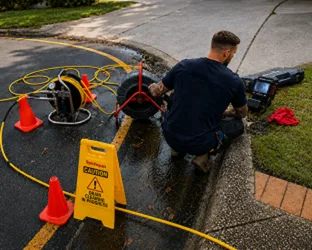
Stop the water, make the area safe, find the cause. Only then does a price get put in front of you, and nothing starts until you have agreed it.

Finished on the night wherever the parts allow. Where they do not, you are left watertight and usable, with the return booked before we leave.
Call and describe it. If it can hold, we will tell you, and book you at daytime rates. If it cannot, you will be glad you rang tonight.
Straight answers on rates, timing and when it can safely wait.

Ring us and a plumber picks up. Leave details instead and you will get a callback with an ETA, not a sales call.

Leave your details and our local Carramar team will call you back fast.